- Saidu Sharif, District Swat — Khyber Pakhtunkhwa
Disability is not the barrier.
Inaccessibility is.
GMK Welfare Organization works alongside persons with disabilities in Pakistan — securing assistive devices, opening up health services, and pushing employers and public places to be usable by everyone.
340 volunteers already signed up this year. Two hours a week is enough to matter.
Our vision
A stronger, more inclusive community where everyone has the opportunity to participate, contribute, and thrive — and no one is left behind.
GMK removes barriers.
GMK provides or coordinates solutions to barriers. Every intervention we make is aimed at one specific thing standing between a person and an ordinary life.
A wheelchair
- removes a mobility barrier
Healthcare support
- removes a medical-access barrier
Transport support
- removes an access barrier
Education support
- removes a learning barrier
Employment
- removes an economic barrier
Accessibility work
- removes a physical barrier
Rights awareness
- removes an information or institutional barrier
Five programme areas.
Our work focuses on reducing barriers to healthcare, education, employment, mobility, transport, sports, and social participation. We believe everyone deserves dignity, equal opportunities, and the chance to live a fulfilling and independent life.
Mobility & Assistive Devices
Wheelchairs, crutches, hearing aids and prosthetics — sourced, fitted properly, and repaired or replaced when they no longer serve the person using them.
Health Access
Assessments, therapy referrals, transport to appointments, and someone alongside you through the hospital process.
Education & Skills
School access, educational support, computer skills, vocational training and practical skills.
Jobs & Livelihoods
Skills development, employer introductions, fair interview opportunities, employment and livelihood support.
Rights & Inclusion
Transport barriers, inaccessible buildings and public places, education barriers, workplace accessibility, and helping people understand and access their rights.
Not sure where you fit?
Tell us what you can offer and we will match you to the area where it is needed most.
How GMK works.
GMK identifies barriers faced by persons with disabilities, connects them with practical support and opportunities, and follows each intervention through to a responsible outcome.
Listen
Someone tells us what is standing in their way — in their own words, without a form to fill in first.
Understand & Verify
We check the situation properly, so that support goes where it is genuinely needed.
Connect
We match the need to a volunteer, a professional, a donor, a business or a partner organisation.
Deliver
The device, the referral, the training place or the introduction actually reaches the person.
Follow Up
We go back and check whether it worked, and fix it when it did not.
Report
The outcome goes back to whoever funded or worked on it. Each intervention is followed through to a responsible outcome.
- Your time
- Your skills
- Your experience
- Transport
- Professional knowledge
- Sporting talent
- Business support
- Helping a neighbour
Whether you are an individual, a business, a professional, a sports person, a community group, or someone who simply wants to help, there is a place for you at GMK.
You do not have to make a financial donation to make a difference.
We believe that everyone has something valuable to give. You can support GMK by giving your time, skills, experience, transport, professional knowledge, sporting talent, business support, or simply helping someone in your community.
Four ways in. All of them start with one form.
Tell us how you would like to help and a GMK team member will contact you to discuss the next step.
Volunteer
Escort a patient, teach a class, drive a van, translate at a camp, or handle paperwork from home. Two hours a week is a real contribution.
Donate
Fund a device, a training place or a share of a programme. Every rupee is traced to what it bought.
Sponsor a Project
Take on one project from start to finish and receive the outcome record for it, with the family’s consent.
Offer a Job
Employers: offer one fair interview, a work placement, or an accessible entrance. Small commitments, compounding effect.
Projects, not promises.
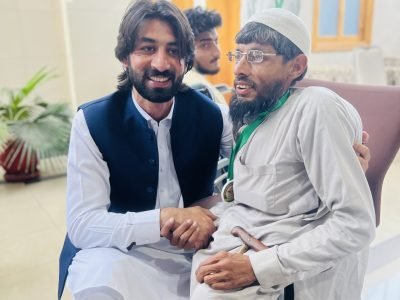
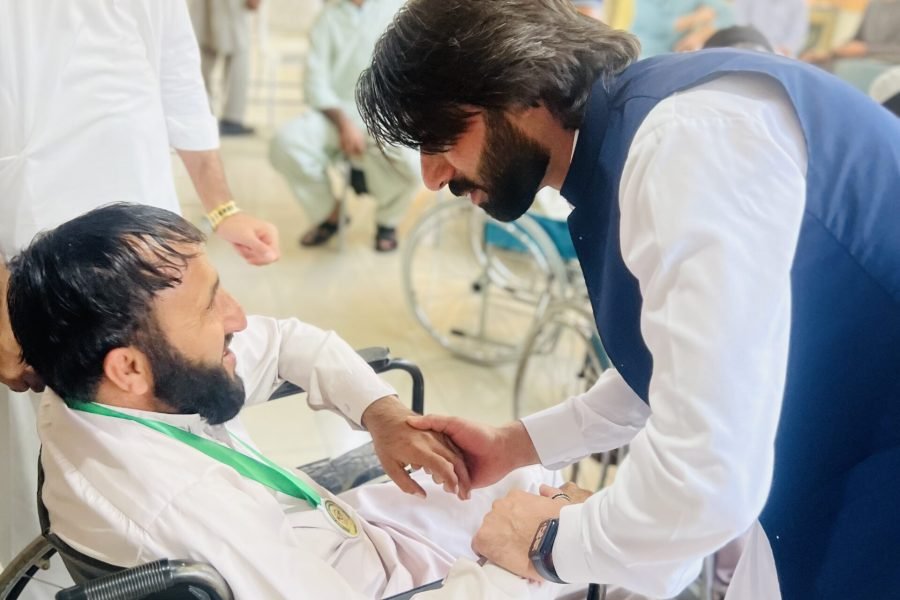
Health access Multan · 2025
Mobile assessment camp
412 people assessed over four weekends; 88 referred for surgery or therapy.
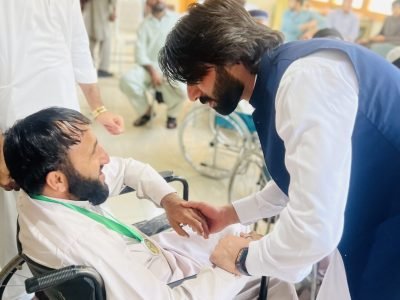
Health access Multan · 2025
Mobile assessment camp
412 people assessed over four weekends; 88 referred for surgery or therapy.
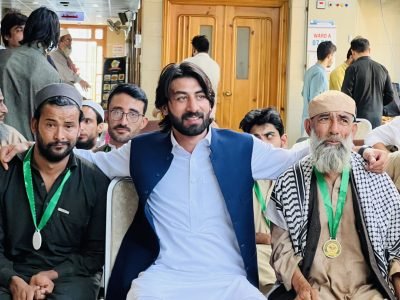
Health access Multan · 2025
Mobile assessment camp
412 people assessed over four weekends; 88 referred for surgery or therapy.
“My son had not left the house in two years. The chair came in March. In June he sat his matric exam in a room with a ramp — because someone from GMK argued with the school until they built one.”
Shazia Bibi
Mother of a beneficiary · Multan
districts reached
jobs secured in 2025
working on the ground
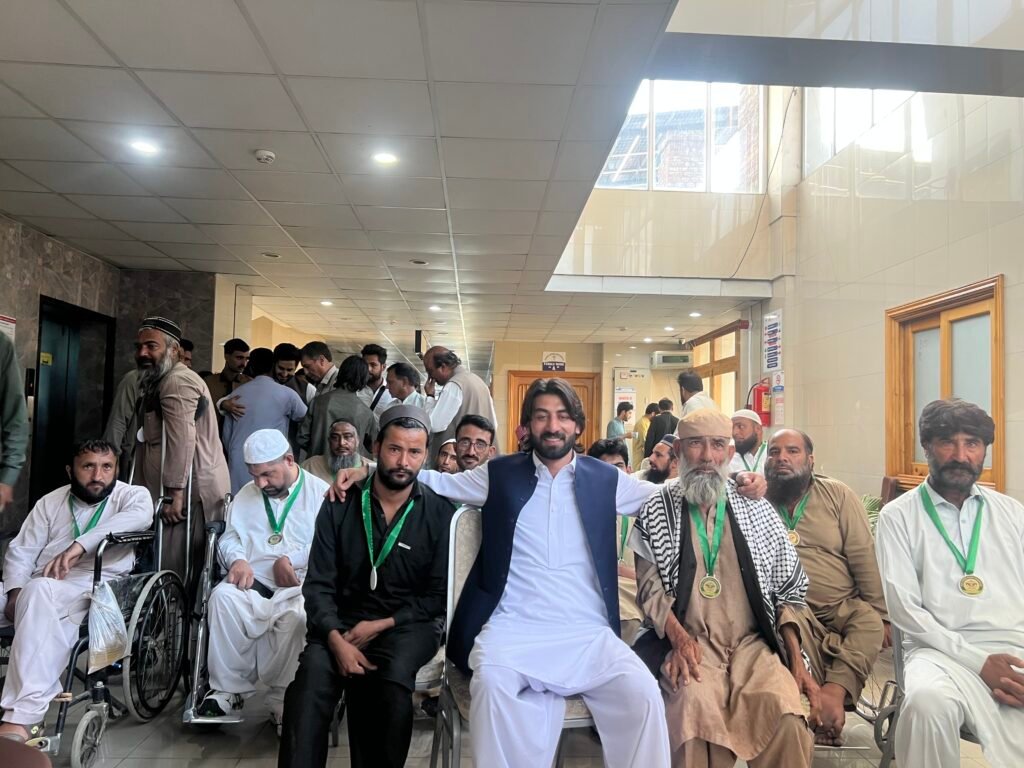
Three ways in. All of them start with one form.
Pick what fits your time and means. We’ll call you within two working days.
Give your hours
Escort a patient, teach a class, drive a van, translate at a camp, or handle paperwork from home. Two hours a week is a real contribution.
Sponsor a device
PKR 24,000 covers one fitted wheelchair. PKR 9,500 covers a hearing aid. You get the handover photo and the family’s name, with their consent.
Open a door
Employers, clinics and shopkeepers: offer an interview, a free consultation, or an accessible entrance. Small commitments, compounding effect.
No file sits in a drawer.
Every request — from a family or a volunteer — follows the same four steps, and you’re told where yours is at each one.
1
You tell us, in one short form
Four fields. Name, phone, city, and what you want to do. Nothing else at this stage.
2
A coordinator calls within 2 days
A real person from your district, not a call centre. Ten minutes to understand what is actually needed.
3
You're matched and briefed
Volunteers get an orientation and a named field lead. Families get an assessment date.
4
It gets done — and reported
Handover photos, receipts and case notes go back to whoever funded or worked on it.